
DIGITAL THEATRE - rewires running
Running, to my simple mind at least, has long been a solitary and introspective practice, a form of movement that requires little gear and offers a rare space for privacy in an increasingly messed-up and heavily surveilled world. Yet the rise of online social fitness networks (OSFNs), particularly Strava, has upset this healthy groove and radically reconfigured the running cultural narrative. What was once a private, somatic encounter between mind, body and environment has been transformed into a digitally mediated arena of public performance, competitive quantification, and social visibility. Strava is not just a tracking tool; it is a platform that reshapes identity, behavior, physiology, and the meaning of movement itself within a broader neoliberal and datafied social order (Feder, 2026; Reichardt, 2023).
Looking at this phenomenon through classical sociological frameworks and contemporary biopsychosocial theory, it becomes clear that Strava’s influence extends far beyond digital representation, reaching into the body’s stress systems, motivational structures, pain responses, and long‑term wellbeing. It is over-reach at its insidious worst.
My world is now a Stage
Erving Goffman’s (1959) dramaturgical model provides a lens for understanding how runners navigate Strava’s social interface. Goffman distinguished between front-stage regions, where individuals perform curated identities for an audience, and back stage regions, where they can retreat from social expectations. Historically, running existed almost entirely in the back stage: a runner could slow down, walk, or abandon a workout without consequence. Strava collapses this boundary, converting the everyday run into a front‑stage performance space. Feder’s (2026) qualitative study of Gen Z runners demonstrates that Strava’s affordances, such as public feeds, segment leaderboards, and expressive activity titling, actively encourage impression management. Runners craft witty titles, attach scenic photos, and selectively upload only their “best” efforts to maintain a coherent, outwardly robust athletic persona. Conversely, slow recovery runs, injury struggles, or aborted workouts are often deleted or hidden to avoid disrupting the curated narrative of progress and competence; you know, we are all happy, shiny people out here. The result is a digital theatre in which the runner becomes both performer and audience, constantly negotiating the expectations of an imagined peer community.
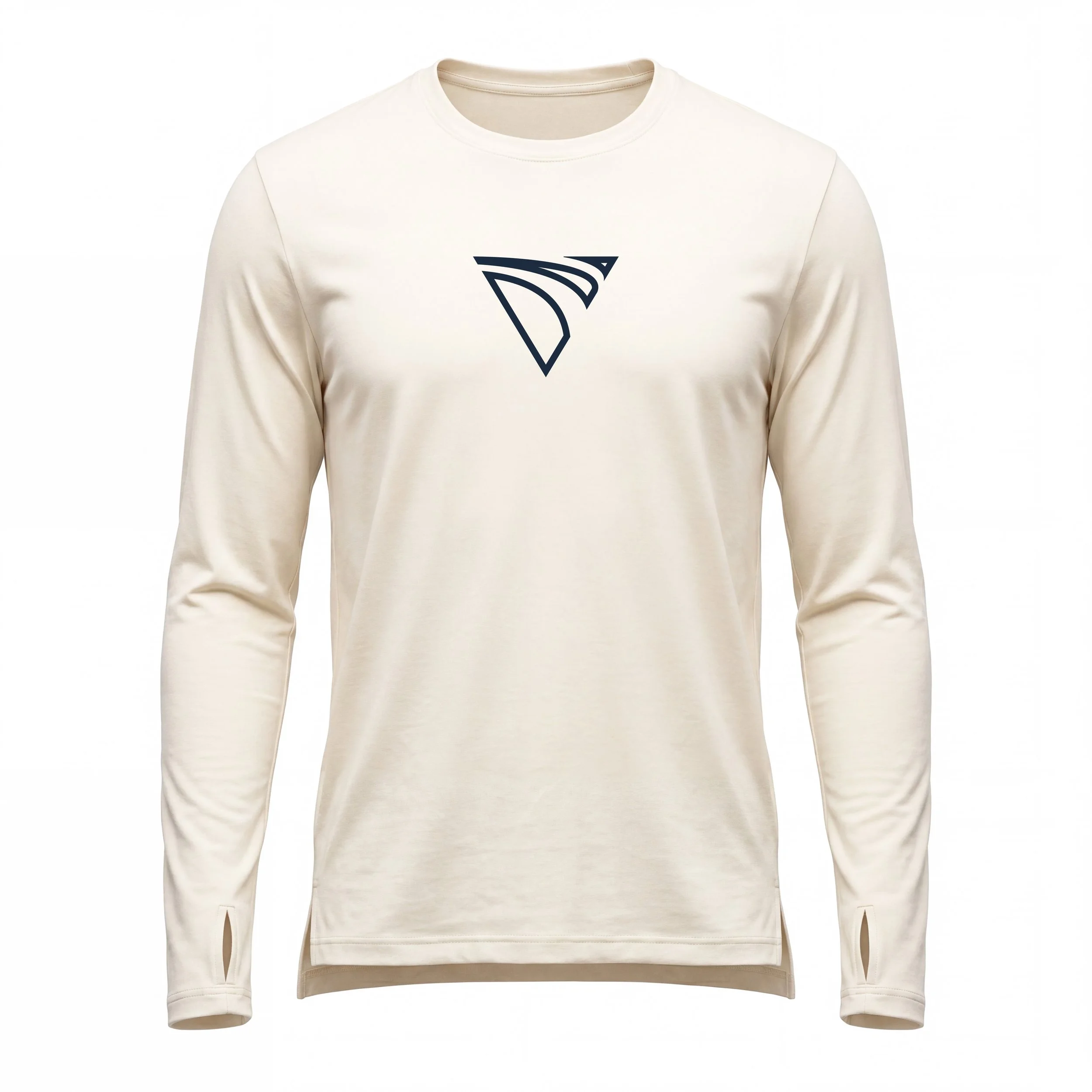
A luxury high performance top intended for track training, warm-ups and training without packs or chest straps.
Stop running in plastic and recycled plastic & run in a predominantly natural fabric with peerless wickability, breathability, comfort and fit.
Expertly fashioned from PARI™ , our next‑generation running fabric engineered from a high‑density 95% Lyocell™ base with 5% spandex for controlled stretch. It delivers a uniquely calm, cool, and stable running experience across a wide temperature range.
Thermoregulation
Tencel (cellulose fibre) has one of the highest moisture‑regain capacities of any performance fibre, giving PARI™:
rapid moisture uptake without surface wetness
a cool‑touch feel during exertion
stable thermal behaviour in warm–moderate conditions
reduced cling and reduced “swamp‑shirt” effect
Ideal for 10–25°C running conditions.
Moisture Management
Unlike polyester (which repels moisture), Tencel absorbs sweat into the fibre core, spreads it, and releases it steadily; delivering:
smoother evaporative cooling
less salt‑crusting
reduced odour build‑up
more consistent comfort over long runs
Softness + Skin Comfort
Tencel fibres have a smooth, rounded cross‑section, giving PARI™:
exceptional softness
reduced micro‑abrasion
low friction under pack straps or repetitive arm swing
suitability for sensitive skin
Movement Stability — controlled stretch, no sag
The 5% spandex is calibrated to maintain:
shape retention
garment stability during sweat load
freedom of movement without bounce
a clean silhouette that doesn’t bag out over time
Breathability — high airflow with a calm thermal profile
Tencel’s internal structure allows:
high vapour transmission
excellent airflow
Estimated UPF Protection Level
UPF 20–25
PARI™ (95% Tencel / 5% Spandex)
A high‑performance running fabric engineered for natural thermoregulation, exceptional softness, and stable movement. Tencel’s dense, smooth fibres deliver cool‑touch comfort, fast moisture uptake, and reduced odour, while 5% spandex maintains shape and freedom of movement. The mid‑weight knit provides natural UV protection (UPF 25 ). Designed for runners who want natural‑fibre intelligence with modern performance.
Read the swing tag provided with its detailed care instructions. Cold hand wash only.
Strava’s cultural logic mirrors the surging, broader, neoliberal imperative to treat the self as a project requiring continuous optimisation; perfection is a mirror. This mindset and its media mechanisms frame health as a personal responsibility and position individuals as entrepreneurs of their own bodies (Woolley, 2023). Within this school, movement is valuable only when it can be captured, quantified, and compared. The now‑ubiquitous aphorism, “If it’s not on Strava, did it even happen?” encapsulates this shift and tells you all you need to know of the echoing emptiness of the platform. Robinson (2020) found that social validation reshapes the meaning of exercise itself: cold, miserable, or solitary efforts are reframed as positive because they will later yield digital recognition. A run that would normally feel unpleasant and tough, as it’s cold, slow, lonely, or physically taxing, becomes psychologically reframed as worth it because it will produce a visible digital artifact that earns social validation; the Kudos, comments, leaderboard positions.
In other words, with Strava and similar platforms, the experience of the run becomes secondary to the digital representation of the run, which is now the primary. A run is valuable only if it can be displayed, validated, and socially consumed; piss off.
Feder (2026) similarly shows that runners increasingly anticipate the social reception of their activities, transforming intrinsic motivation into a form of collective matter mediated by platform visibility. It is as though the runner’s body becomes a mobile site of neoliberal governance: a self-optimising, data‑producing entity whose value is measured through metrics rather than lived experience.
Surveillance
Michel Foucault’s (1977) concept of the Panopticon, where individuals internalize surveillance and regulate their own behavior, offers an alternate, interesting framework. Unlike Bentham’s architectural model, Strava’s panopticon is decentralized and participatory. Runners voluntarily expose their routes, speeds, and physiological data to a network of peers, creating what Reichardt (2023) describes as horizontal or participatory surveillance. This visibility has measurable behavioural consequences. Feder (2026) reports that runners often choose faster paces on recovery days or design elaborate routes to produce “Strava Art.” The body is no longer guided by all-important internal physiological cues like breathing, fatigue, proprioception and RPE but by the imagined, judging gaze of the digital audience. The platform effectively shapes and disciplines physical behaviour through subtle but pervasive social pressures.
It’s Always About the Money
Beyond social dynamics, Strava participates in what Zuboff (2019) terms surveillance capitalism: the extraction of human experience as raw material for datafication and monetisation. Although Strava markets itself as a community platform, its business model depends on the continuous harvesting of biometric, geographic, and behavioural data; let’s stop kidding ourselves. Wang’s (2025) analysis of smart wearables extends this argument, showing how bodily rhythms, heart rate, movement patterns, and sleep cycles are translated into predictive governance infrastructures and, with it, potential dissemination to external AI interrogation, aggregation and proliferation services. While Strava is not a wearable device per se, it operates within the same ecosystem of data extraction and algorithmic processing. The runner becomes what leisure scholars call a technobody: a hybrid entity whose physical actions are inseparable from their digital traces (Reichardt, 2023).
To understand the full implications of this transformation, the biopsychosocial model (Engel, 1977) provides a comprehensive framework. Biologically, Strava alters training behaviours in ways that increase the risk of overtraining syndrome (OTS), chronic fatigue, and musculoskeletal injury. Sports science research shows that externalised performance pressure increases the likelihood of physiological dysregulation (Meeusen et al., 2013). Richardson and Smith (2026) found that Strava users reported significantly higher rates of “training beyond physiological readiness,” driven by the desire to maintain digital visibility. Psychophysiological research also demonstrates that social evaluation threat, the sense of being judged, triggers cortisol release and sympathetic nervous system activation (Dickerson & Kemeny, 2004). Strava’s constant visibility creates a persistent low‑level evaluation environment, producing elevated cortisol, reduced recovery capacity, and sleep disturbances. Zuboff’s (2019) framework reveals how Strava transforms these biological rhythms into extractable data streams, contributing to a broader biomedicalization of everyday life, over which you have no control.
Self-Determination Threatened
Psychologically, Strava reshapes motivation, identity, and emotional well-being. Self‑determination theory (Deci & Ryan, 2000) shows that extrinsic motivation undermines long‑term well-being, yet Strava systematically shifts runners from intrinsic joy to extrinsic validation. Social comparison processes (Festinger, 1954) intensify performance anxiety and self‑criticism, and Feder (2026) reports that runners hide “bad runs” to avoid embarrassment. Lupton (2016) identifies compulsive quantification as a form of behavioural addiction, and many runners feel anxious when unable to record a workout. Exercise psychology research highlights the importance of flow states (Csikszentmihalyi, 1990), autonomy, and playfulness, yet Strava disrupts these by introducing constant self‑monitoring, performance pressure, and external evaluation. The run becomes a task rather than a playful, embodied experience.
Pain science illuminates how Strava rewrites the experience of discomfort. Modern pain research emphasises that pain is not just a biological signal but a biopsychosocial experience shaped by context, meaning, and social expectations. Strava alters pain perception by encouraging runners to push through discomfort to maintain digital status, reframing pain as a badge of honour, and normalising overreach. This can lead to maladaptive pain behaviours, predisposition to inflammatory-centred illnesses and chronic injury cycles.
Digital burnout represents another emerging fallout. Research on digital fatigue shows that constant self‑monitoring and social comparison lead to emotional exhaustion, reduced enjoyment, depersonalization, and withdrawal from physical activity. Strava’s always‑on environment creates a form of athletic digital burnout, where the joy of movement is replaced by the fatigue of constant performance. The platform’s design encourages continuous engagement, making disengagement feel like a loss of identity, social presence and esteem.
These biopsychosocial consequences raise significant policy and ethical considerations. Strava’s heatmaps have previously exposed sensitive military locations, demonstrating the need for robust data privacy governance. Users deserve transparency regarding how their data is used, how leaderboards are ranked, and how their behaviour is predicted. Health equity concerns also arise, as Strava privileges those with safe running environments, high‑end devices, and discretionary time. Platforms should consider default privacy settings, warnings about overtraining, and tools for healthy digital disengagement. Ethical design principles could help mitigate the pressures of constant visibility and performance.
Strava has not simply digitised running; it has re‑engineered its social, cultural, psychological, and physiological foundations. Through Goffman’s dramaturgy, Foucault’s panopticon, Zuboff’s surveillance capitalism, and the biopsychosocial model, we see how the platform transforms runners into performers, data subjects, and neoliberal entrepreneurs of the self. The digital theatre of Strava reshapes not only how people run, but why they run — and for whom. As OSFNs continue to expand, understanding these dynamics becomes essential for critically examining the future of embodied life in a datafied world.
References
Csikszentmihalyi, M. (1990). Flow: The psychology of optimal experience. Harper & Row.
Deci, E. L., & Ryan, R. M. (2000). The “what” and “why” of goal pursuits: Human needs and the self‑determination of behavior. Psychological Inquiry, 11(4), 227–268.
Dickerson, S. S., & Kemeny, M. E. (2004). Acute stressors and cortisol responses: A theoretical integration and synthesis of laboratory research. Psychological Bulletin, 130(3), 355–391.
Engel, G. L. (1977). The need for a new medical model: A challenge for biomedicine. Science, 196(4286), 129–136.
Feder, J. (2026). Running the numbers: Strava, communal self‑tracking and the digital mediatization of movement among Gen Z runners. London School of Economics.
Festinger, L. (1954). A theory of social comparison processes. Human Relations, 7(2), 117–140.
Foucault, M. (1977). Discipline and punish: The birth of the prison. Vintage Books.
Goffman, E. (1959). The presentation of self in everyday life. Anchor Books.
Lupton, D. (2016). The quantified self. Polity Press.
Meeusen, R., Duclos, M., Foster, C., Fry, A., Gleeson, M., Nieman, D., Raglin, J., Rietjens, G., Steinacker, J., & Urhausen, A. (2013). Prevention, diagnosis, and treatment of the overtraining syndrome. European Journal of Sport Science, 13(1), 1–24.
Reichardt, U. (2023). Self‑observation in the digital age: The quantified self, neoliberalism, and the paradoxes of contemporary individualism. JSTOR.
Richardson, J., & Smith, A. (2026). A mixed‑methods analysis of motivational dynamics and Strava use in active club runners. Behavioral Sciences, 16(2), 224.
Robinson, S. (2020). “If it’s not on Strava it doesn’t matter”: The collective shaping of running via self‑tracking social interactions. Sociology of Health & Illness, 42(2), 312–326.
Wang, M. (2025). The quantified body: Identity, empowerment, and control in smart wearables. arXiv.
Woolley, D. (2023). Desire lines: Quantified‑self‑portraits produced with a fitness tracking watch. In Wearable objects and curative things (pp. 211–237). Palgrave Macmillan.
Zuboff, S. (2019). The age of surveillance capitalism: The fight for a human future at the new frontier of power. PublicAffairs.
.