
LOVE me TENDON
In distance running, performance is traditionally valued through the lenses of maximal oxygen uptake, metabolic thresholds, and baseline running economy, along with race times. In an interesting twist, as competitive efforts extend in duration, the runner’s susceptibility to mechanical and neurological degradation becomes the main limiting factor. "Fatigue-proofing" represents a modern concept in sports science aimed at reducing this. It focuses on the safeguarding of mechanical efficiency, tissue resilience, and neural drive under extended physiological load.
Let’s explore the biomechanical and physiological mechanisms underpinning fatigue-proofing by having a look at three key interrelated pillars: joint stiffness, tendon hysteresis, and neuromuscular durability. We should be able to see how these components decline with acute fatigue and also try to consider some targeted training interventions to help functional durability in all runners.
Joint Stiffness and Kinetic Regulation
Running mechanics rely on a spring-mass model, where the lower extremity behaves like a cohesive, compressing spring during the stance phase (Blickhan, 1989). Vertical stiffness describes the global compression of the body centre of mass in response to ground reaction forces, while leg stiffness isolates the change in leg length along its longitudinal axis. Leg stiffness is a direct mathematical outcome of individual joint stiffnesses, specifically at the ankle, knee, and hip, regulated through coordinated eccentric muscle actions.
To maximise running economy, you need an optimal ( best you can do considering your age and neuromuscular capacity, not to mention injury history), rather than maximal, level of stiffness. High ankle and knee stiffness during early stance prevent excessive joint flexion, thereby minimising the mechanical work required of muscular motors to reposition the limbs (Barnes & Kilding, 2015). This rigidity means ground reaction forces are transferred quickly, minimising ground contact time and maximising linear velocity.
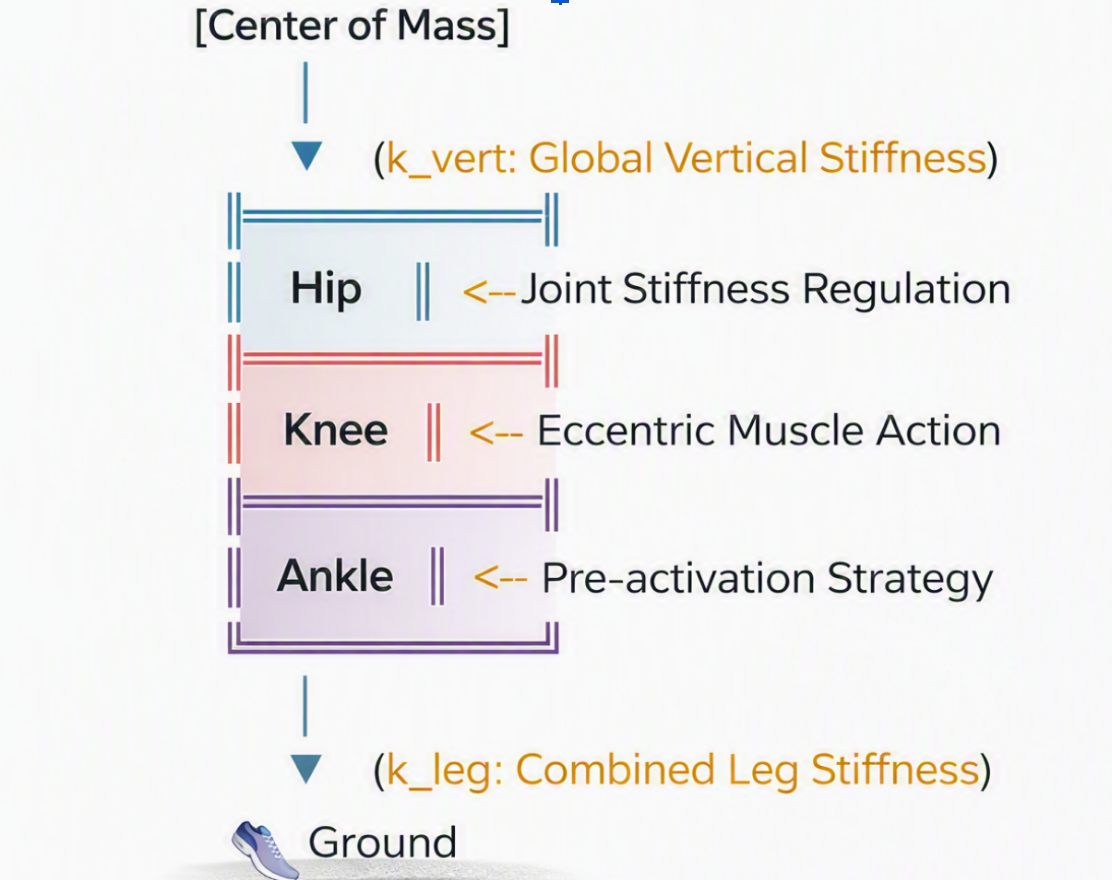
The Impact of Fatigue
Prolonged running induces localized muscular fatigue that seriously alters joint stiffness profiles. As the contractile units of the quadriceps and triceps fatigue, their capacity to resist eccentric lengthening diminishes. Out of the lab, you experience this when you are deep into a long run and your legs feel like lead, a major mechanical shift is underway. Biomechanical data show that fatigued runners exhibit increased peak knee and ankle flexion during stance (Degache et al., 2019).
In plain speech, stance is the brief window of time when your foot is pinned to the ground supporting your weight. Increased flexion means that instead of maintaining a strong, stable structure upon impact, your knee buckles deeper and your ankle drops lower than they normally would.
This structural compliance delays the transition from the braking to the propulsion phase, with the result of an increased ground contact time. To maintain a constant velocity, the central nervous system (CNS) must increase positive muscular effort, accelerating metabolic energy spend and diminishing running economy in the latter stages of a race or tough training run.
The Physics of Tendon Elasticity
The Achilles tendon and plantar fascia function as biological springs. They store mechanical energy during the braking phase of running and release it via elastic recoil during propulsion (Alexander & Vernon, 1975).When your foot strikes the track during the initial braking phase of a sprint, these tissues stretch and store the oncoming mechanical energy. As you transition into the push-off phase, they snap back into shape, releasing that stored energy via elastic recoil to help propel you forward.
Because these elastic structures handle the physical stretching and snapping, your actual leg muscles don’t have to quickly shorten and lengthen to generate movement. Instead, they can work under near-isometric conditions, meaning they stay quite still and firm while holding the tension. From a cellular standpoint, keeping the muscle fibres stationary during a contraction consumes significantly less adenosine triphosphate (ATP) than forcing the muscles to actively contract and shorten. This kind of mechanical handoff allows you to generate massive power while burning far less cellular fuel.
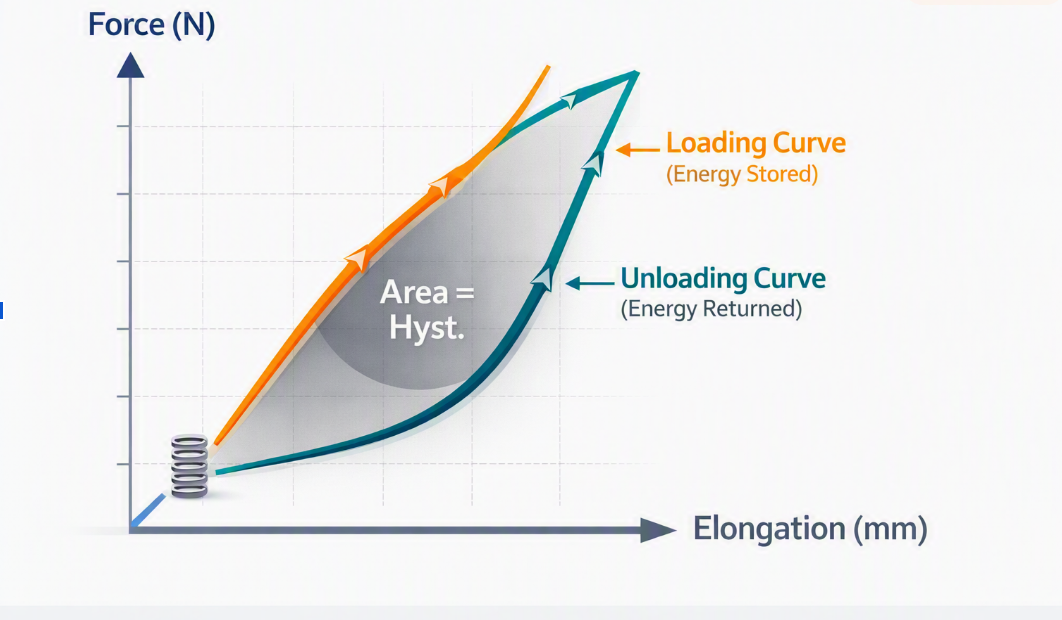
Tendon Loading & Hysteresis
No living material is perfectly elastic. When a mechanical spring stretches and recoils, it never returns 100% of the energy put into it. The energy lost during this mechanical cycle is lost as heat. In human biomechanics, this phenomenon of energy loss within elastic tissues is known as tendon hysteresis.
For a runner, particularly a sprinter, minimising this lost energy means maximising raw mechanical efficiency out of the starting blocks and during top-end velocity phases.
The Biomechanics of Tendon Hysteresis
When your foot strikes the ground, your Achilles tendon is subjected to a loading phase. The substantial impact forces stretch the tendon, storing kinetic energy within its collagen matrix. As your hips pass over your foot and you push off into the unloading phase, the tendon recoils to drive you forward.
If you plot the mechanical force against the structural elongation during this loop, the unloading path sits lower than the loading path. The area under the loading curve represents the total energy stored, while the area under the unloading curve represents the useful energy returned to your stride. The gap remaining between these two curves represents the energy lost for good as internal friction and heat.
This relationship is calculated via the standard biomechanical formula:

What Makes a Low Hysteresis Rate?
Healthy, compliant, yet highly structural tendons display a low hysteresis rate of approximately 5% to 10% (Kubo et al., 2002). This means that up to 90% to 95% of the kinetic energy absorbed during the brutal braking phase of sprinting is instantly recycled into forward propulsion.
Say, for a 72kg masters aged sprinter, keeping this number low is critical for several performance and safety reasons:
Metabolic Preservation
A low hysteresis rate allows your lower limbs to operate very efficiently, saving your localised ATP-PCr stores for the actual muscular work required to sustain top-end speed over 100 meters.
Thermal Protection
If your tendon hysteresis increases (e.g., to 15% or 20%) due to detraining, structural degradation, or systemic fatigue, that extra energy is converted into localised heat. Excessive heat accumulation within the core of the Achilles tendon alters collagen cross-linking and is a major chemical trigger for micro-tears and chronic tendinopathy. The result? A lot of time, effort and money is spent on physical therapy instead of exercise science for prevention and optimisation.
Rate of Force Development
High-load structural training (like heavy isometric holds) increases tendon stiffness, compressing the width of this loop. This ensures that the energy return occurs faster, matching the brief 80 to 90 millisecond ground contact times seen in elite sprinting; at any age.
When a sprinter stumbles into fatigue over successive 60m or 100m repetitions, the deterioration in time is not just a result of neural burnout or muscle acidity. It’s also driven by a mechanical failure in your lower limb spring system.
Repeatedly pushing your tissues at maximum velocity changes the mechanical behaviour of your tendons, causing a phenomenon known as tendon creep or mechanical softening.
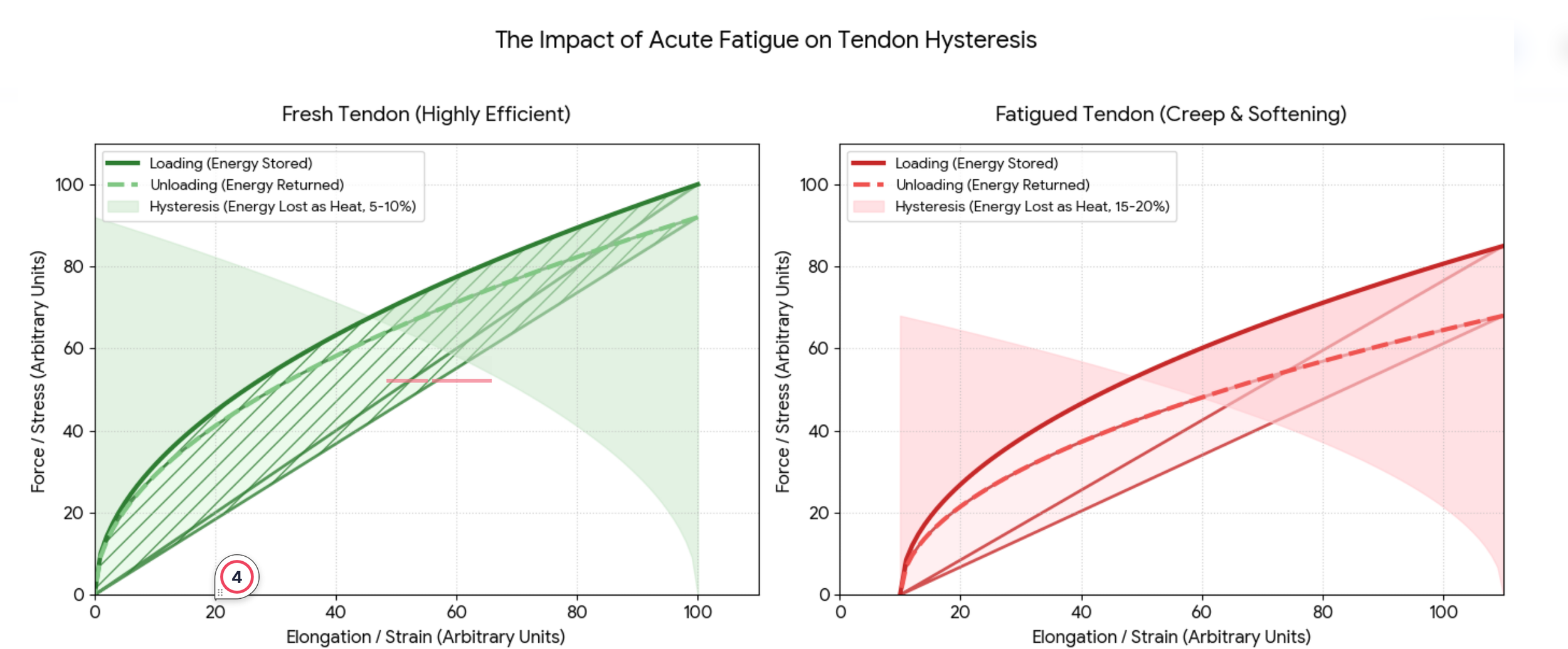
Tendon Fatigue Curves
Tendon Creep and Softening
During the first few explosive rounds of a track session, your Achilles tendon acts as a highly disciplined, stiff spring. If, however, you carry on belting out maximum-velocity, the successive impacts force the collagen fibres within the tendon to slide past one another without having enough time to snap fully back to their original resting length.
This structural deformation triggers two distinct, negative consequences for the runner:
The Stiffness Collapse
The Achilles tendon experiences a transient reduction in structural stiffness (Fletcher et al., 2010). The tendon becomes too "slack" or compliant. Instead of acting like a stiff metal spring that instantly rebounds upon ground contact, it acts like a loose rubber band.
The Hysteresis Spike
As the structural integrity softens, the mechanical hysteresis loop widens dramatically. Instead of losing a minimal 5% of energy to heat, a fatigued tendon can see its hysteresis rate spike to 15% or 20%.
Kinetic Chain Reaction
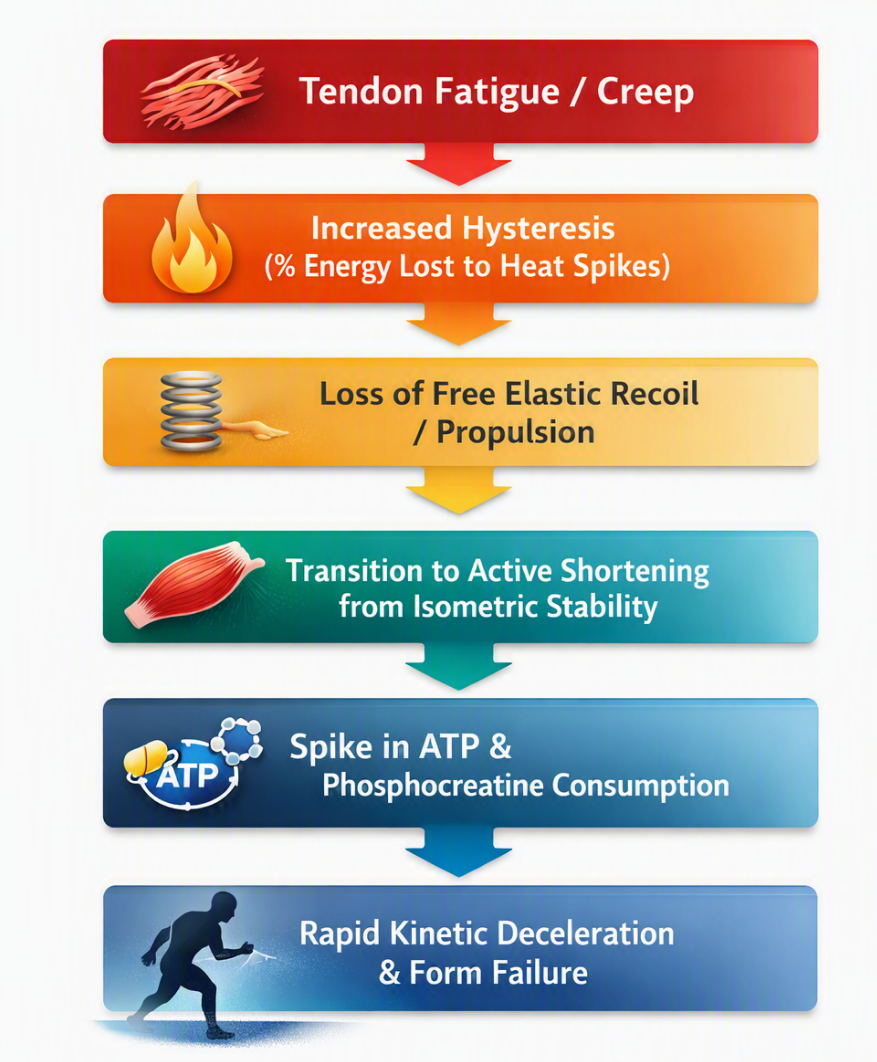
When the hysteresis rate climbs due to fatigue, the entire physics profile of your running stride changes. Because the widened loop indicates that a larger fraction of your stored elastic energy is being converted into thermal energy (heat) rather than useful kinetic output, your body has to find that missing propulsion elsewhere. Repetitive mechanical loading over hours of running alters the viscoelastic properties of collagenous tissues, a phenomenon known as tendon creep or mechanical softening. With acute fatigue, the Achilles tendon experiences a transient reduction in structural stiffness alongside a marked increase in hysteresis (Fletcher et al., 2010).
To prevent you from grinding to a halt, your surrounding musculature, namely the gastrocnemius and soleus (calf muscles), have to step in to compensate for the lost energy; placing them under added load.
The Loss of the Isometric Advantage
The muscles can’t maintain the highly efficient, stationary, near-isometric holding states that allow the tendon to do the hard work.
The Transition to Active Shortening
The muscle fibres are subjected to vigorous and rapid concentric shortening loops to generate the required propulsive forces.
The Metabolic Penalty
Active muscle shortening is bloody expensive from a cellular standpoint. It shifts the entire mechanical burden of the sprint away from passive, free elastic structures and dumps it entirely onto active, metabolically demanding muscle tissue. As hysteresis climbs, a larger fraction of stored elastic energy converts to thermal energy rather than kinetic output. The surrounding musculature must compensate for this lost energy by increasing active concentric force production. This shifts the metabolic burden away from passive elastic structures and onto active metabolic tissue, driving up the oxygen cost of transport and rapidly burning through your localised reserves of Adenosine Triphosphate (ATP) and phosphocreatine.
For a 47-year-old Masters sprinter, for example, it may help explain why the final 20 meters of a 100m sprint feel like running through wet cement when fatigued. The old springs have temporarily unravelled, and your muscles are desperately over-burning cellular fuel just to maintain forward velocity.
Reduce Mechanical Softening
Knowing that fatigue physically degrades your tendons' spring efficiency, you can tailor your track sessions to protect your current hysteresis profile.
Enforce Strict Micro-Recovery Windows
To allow the collagen matrix to recover its resting length and shed accumulated core heat between sprint intervals, utilize a minimum recovery boundary of 1 minute of rest for every 10 meters run (e.g., 6 full minutes of passive rest after a 60m maximum effort blast).
Monitor the Drop-Off Threshold
In your training logs, if your 100m times drop off by more than 2% to 3% in a session, your tendons may have crossed the mechanical softening threshold. Continuing the session beyond this point doesn’t train sprinting velocity; it just trains your muscles to work in an inefficient, high-metabolic state while exposing the softened tendon to micro-tears
Neuromuscular Durability
Mechanisms
When sprinting the 100m or 200m, maintaining your top-end speed requires more than just muscular endurance; it needs neuromuscular durability. This describes your nervous system’s capacity to maintain optimal muscle activation patterns, strategic motor unit recruitment, and rapid firing rates (rate coding) despite the onset of intense fatigue (Passfield et al., 2022). If your nervous system lacks this durability, your coordination fails, your ground contact times lengthen, and you rapidly lose velocity.
The primary mechanical mechanism that your nervous system uses to maintain efficiency is the stretch-shortening cycle (SSC). The SSC functions by blending the passive, spring-like properties of your muscle-tendon unit with high-speed neural reflexes.
This process occurs in two distinct neural stages.
The Pre-Activation Phase
Milliseconds before your shoes touch the ground, your central nervous system sends rapid, preparatory "feedforward" commands down the spinal cord to muscle groups like your calves and hamstrings. This is a predictive priming mechanism. By pre-activating these muscles before impact, the nervous system physically stiffens the muscle fibres, turning them into a solid anchor.
The Eccentric Phase
Because the muscle is pre-stiffened and ready, the sudden impact of hitting the ground violently stretches the muscle spindles inside the tissue. This rapid stretch instantly triggers a protective neural loop known as the monosynaptic stretch reflex via the Ia afferent pathway (Komi, 2000).
This reflex arc bypasses conscious thought, sending an instant signal to the spinal cord that fires a massive, involuntary surge of force back into the muscle during the eccentric (braking) phase.
In a runner with high neuromuscular durability, this neural reflex operates flawlessly on every stride. The combination of predictive muscle stiffness and a super-quick stretch reflex ensures that your muscle behaves like a non-yielding wall.
This forces 100% of the oncoming impact energy away from the muscle fibres and directly into your Achilles tendon and plantar fascia, maximising your free elastic recoil.
When neuromuscular durability degrades later in a training session or race, the pre-activation signal becomes weak and delayed. Your muscles are caught "soft" at touchdown. The stretch reflex fires too slowly, making the kinetic energy bleed off as heat and forcing you to rely on slow, exhausting muscular effort and mental grit to finish the race.
SSC Fatigue
The degradation of the stretch-shortening cycle under the influence of fatigue operates through a complex interplay of both central and peripheral physiological pathways. Centrally, a progressive reduction in supraspinal drive reduces the essential feedforward pre-activation commands sent to the lower limb musculature prior to ground contact (Millet et al., 2011). Without this predictive neural priming, the target muscles lack the preparatory structural stiffness required to properly anchor the oncoming impact forces. Peripherally, this mechanical deficit is compounded by the rapid accumulation of metabolic byproducts, such as hydrogen ions and inorganic phosphate, alongside localized structural microtrauma caused by intense eccentric loading. These peripheral stressors directly impair muscle spindle sensitivity, which compromises the system's underlying sensory network badly.
How does this feel?
For an elite sprinter sputtering in the back half of a brutal interval session, this complex neurological and peripheral breakdown translates into a very distinct, frustrating, and heavy physical sensation. You don’t feel the "supraspinal drive" dropping, but you absolutely will feel the effects in how your feet interact with the track.
When you are fresh, your foot strike has a crisp, "ping" to it; you hit the track, your ankle stays completely rigid, and you bounce off the surface almost instantly. As central drive drops and your feedforward pre-activation commands degrade, that crispness vanishes. Instead of feeling like a stiff steel spring, your lower limbs begin to feel like soft rubber. You become acutely aware that your ankle and foot arch are "giving way" or collapsing slightly upon impact. Biomechanically, because your muscles failed to stiffen before touchdown, you feel a sensation of "soft-mushing" into the track, where your foot sinks and spends noticeably more time glued to the ground on each stride.
Peripherally, as muscle spindle sensitivity dulls and metabolic byproducts pool in your calves, the effortless bounce of the stretch-shortening cycle disappears. You lose the sensation of being "carried" by your tendons doing their job. Suddenly, sprinting shifts from smoothly coordinated, reactive rhythm into a conscious battle against the track. You physically feel the harsh vibration of the ground impact traveling up into your knees and lower back, because your soft, unprimed muscles are failing to dampen the braking forces. To maintain your velocity and fight this kind of mechanical collapse, your brain forces you to switch from a bouncing strategy to a pushing approach. You will feel a sudden, intense burn and a deep, heavy fatigue localized in the bellies of your calves and hamstrings. This happens because you are now consciously forcing those muscles to actively shorten and drive you forward, rather than letting the Achilles tendon do it for free. Your breathing rate spikes, your stride feels labored, and despite pushing down on the track with maximum effort, you slow down - 400m runners will know this. You feel as though you are sprinting through deep sand or wet cement, fighting a body that has lost its elastic sharpness
How does it work?
Now, as to what is happening physiologically, well, with the reflexive potentiating effect that marks an efficient SSC becoming severely dulled, the excitatory feedback from the muscle spindles drops, inhibitory feedback mediated by the Golgi tendon organs via the afferent pathway rises as a protective mechanism to shield the joint from excessive stress. This sensory shift forces a significant reduction in overall involuntary force output during the braking phase of a stride. To maintain a given running pace or power output in the face of this declining elastic efficiency, the motor cortex is forced to compensate by prematurely recruiting higher-threshold Type II motor units. Because these highly glycolytic fast-twitch fibers are inherently less efficient and fatigue rapidly under continuous strain, their accelerated recruitment hastens systemic metabolic failure. Ultimately, this reliance on active, fatiguing muscular work introduces substantial mechanical variability into the sprinter's stride architecture, significantly elevating the risk of acute musculoskeletal injury.

A luxury high performance top intended for track training, warm-ups and training without packs or chest straps.
Stop running in plastic and recycled plastic & run in a predominantly natural fabric with peerless wickability, breathability, comfort and fit.
Expertly fashioned from PARI™ , our next‑generation running fabric engineered from a high‑density 95% Lyocell™ base with 5% spandex for controlled stretch. It delivers a uniquely calm, cool, and stable running experience across a wide temperature range.
Thermoregulation
Tencel (cellulose fibre) has one of the highest moisture‑regain capacities of any performance fibre, giving PARI™:
rapid moisture uptake without surface wetness
a cool‑touch feel during exertion
stable thermal behaviour in warm–moderate conditions
reduced cling and reduced “swamp‑shirt” effect
Ideal for 10–25°C running conditions.
Moisture Management
Unlike polyester (which repels moisture), Tencel absorbs sweat into the fibre core, spreads it, and releases it steadily; delivering:
smoother evaporative cooling
less salt‑crusting
reduced odour build‑up
more consistent comfort over long runs
Softness + Skin Comfort
Tencel fibres have a smooth, rounded cross‑section, giving PARI™:
exceptional softness
reduced micro‑abrasion
low friction under pack straps or repetitive arm swing
suitability for sensitive skin
Movement Stability — controlled stretch, no sag
The 5% spandex is calibrated to maintain:
shape retention
garment stability during sweat load
freedom of movement without bounce
a clean silhouette that doesn’t bag out over time
Breathability — high airflow with a calm thermal profile
Tencel’s internal structure allows:
high vapour transmission
excellent airflow
Estimated UPF Protection Level
UPF 20–25
PARI™ (95% Tencel / 5% Spandex)
A high‑performance running fabric engineered for natural thermoregulation, exceptional softness, and stable movement. Tencel’s dense, smooth fibres deliver cool‑touch comfort, fast moisture uptake, and reduced odour, while 5% spandex maintains shape and freedom of movement. The mid‑weight knit provides natural UV protection (UPF 25 ). Designed for runners who want natural‑fibre intelligence with modern performance.
Read the swing tag provided with its detailed care instructions. Cold hand wash only.
Evidence-Based Training Interventions
To systematically counteract these fatigue-related declines, sports scientists must prescribe training interventions that aim to alter tissue morphology and neural recruitment patterns.
Heavy Resistance Training
To counteract the loss of joint stiffness and the elevation of tendon hysteresis, runners must perform heavy resistance training (80% of 1-Repetition Maximum, 1RM). To arrest the degradative cycle of repeated fatigue, you need to subject the lower extremity to heavy resistance training, specifically calibrated at ≥80% of 1-Repetition Maximum (1RM). Lower intensities fail to deform the dense extra-cellular matrix sufficiently to trigger cellular remodeling. Heavy loading initiates mechanotransduction, a process where physical shear stress on the cell membrane is converted into biochemical signals within the local tenocytes, accelerating collagen synthesis and cross-linking (Bohm et al., 2015). This structural adaptation enhances the Young's modulus (material stiffness) of the Achilles tendon, directly minimizing hysteresis under fatiguing conditions. This helps prevent the tendon from stretching into zones of structural micro-failure and protecting the runner from the very unpleasant pain of chronic tendinopathy
Enlisting heavy eccentric-concentric protocols optimize joint stiffness by altering myosin heavy chain expressions and enhancing the structural integrity of the extracellular matrix within the muscle.
Plyometric Training
High-intensity plyometric training targets the neural components of the SSC. By subjecting the lower extremities to rapid, high-velocity deceleration and acceleration phases, plyometrics train the central nervous system to enhance feedforward pre-activation patterns (Spurrs et al., 2003).
This rapid loading increases the sensitivity of the muscle spindles and de-sensitises the inhibitory thresholds of the Golgi tendon organs. The practical result is a lower-limb architecture capable of maintaining high leg stiffness and minimal ground contact times even under severe systemic fatigue.
Structural Integration and Micro-Periodisation
Integrating fatigue-proofing protocols into an endurance program requires careful periodisation to manage competing if not conflicting, physiological adaptations. Because heavy resistance and plyometric training impose huge neuromuscular loads, they should be phased sensibly relative to metabolic training sessions.
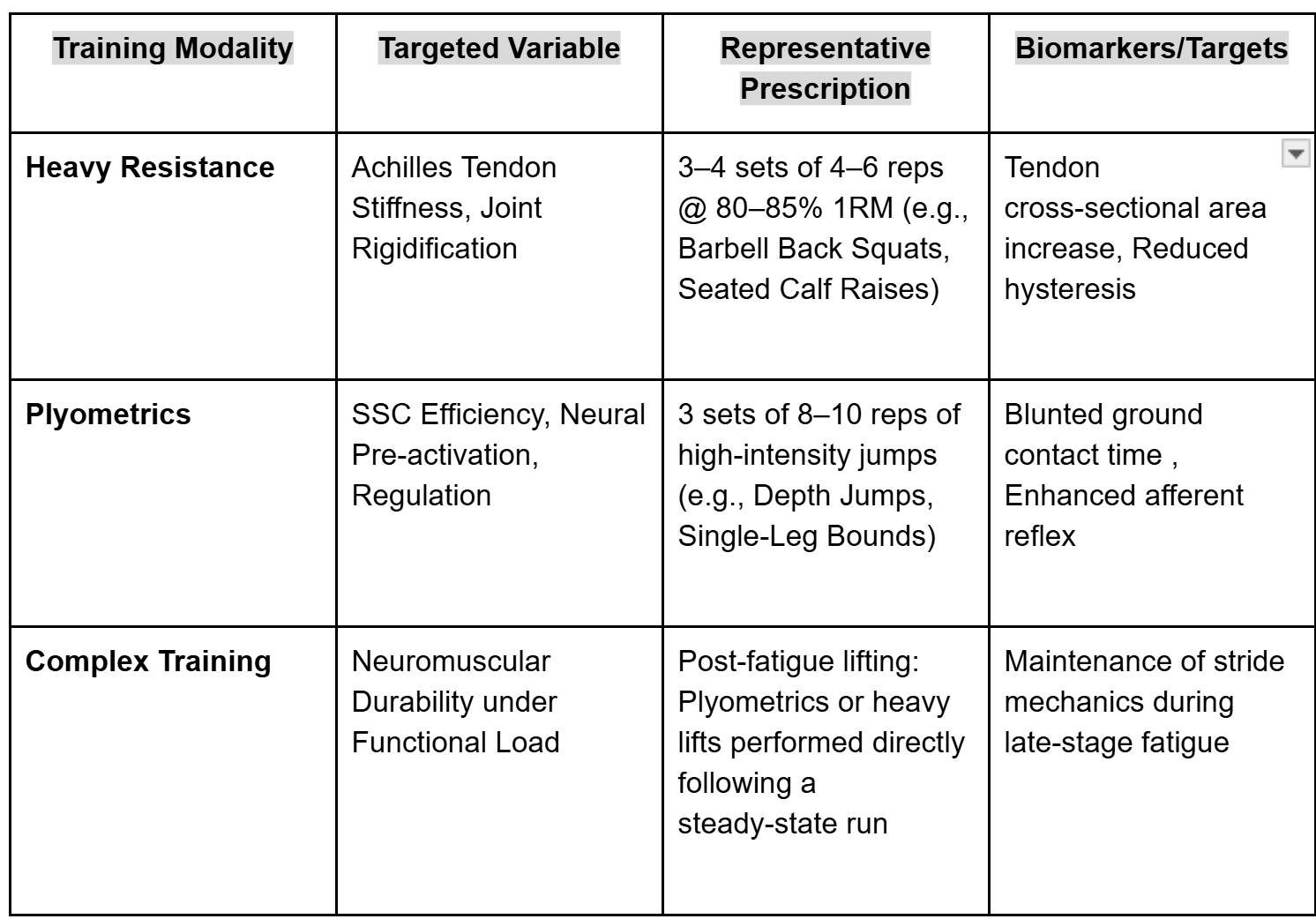
The biomechanics of fatigue-proofing represent a real opportunity to improve your running performance. We can’t get away from the physiological constraint that metabolic parameters dictate baseline performance potential, but your structural durability determines how much of that potential can be sustained over time.
Fatigue disrupts the spring-mass system by decreasing joint stiffness, raising tendon hysteresis, and dampening the neurological potentiations of the stretch-shortening cycle.
By including evidence-based heavy resistance and plyometric training, coaches and athletes can induce positive morphological adaptations in tendon structures and optimize neural feedback loops. These interventions insulate the runner against mechanical breakdown, preserving running economy and shifting the threshold of exhaustion in competitive endurance sports.
BIBLIOGRAPHY
Alexander, R. M., & Vernon, A. (1975). The mechanics of hops by wallabies (Macropodidae) with special reference to the role of tendons. Journal of Zoology, 177(2), 265–283. doi.org
Barnes, K. R., & Kilding, A. E. (2015). Running economy: The missing link in high-performance endurance running. Sports Medicine, 45(9), 1229–1243. doi.org
Blickhan, R. (1989). The spring-mass model for running and hopping. Journal of Biomechanics, 22(11-12), 1217–1227. doi.org
Bohm, S., Mersmann, F., & Arampatzis, A. (2015). Human tendon adaptation in response to mechanical loading: A systematic review and meta-analysis of exercise interventions on healthy tendon properties. Sports Medicine - Open, 1(1), Article 7. doi.org
Degache, F., Morin, J. B., Oehen, L., Guex, K., Giandolini, M., Millet, G. Y., & Millet, G. P. (2019). Running mechanics changes during an extreme mountain ultra-marathon. Journal of Biomechanics, 84, 123–129. doi.org
Fletcher, J. R., Pfister, T. R., & MacIntosh, B. R. (2010). Energy cost of running and Achilles tendon stiffness in man. Journal of Applied Physiology, 109(5), 1496–1504. doi.org
Komi, P. V. (2000). Stretch-shortening cycle: A powerful model to study normal and fatigued muscle. Journal of Biomechanics, 33(10), 1197–1206. doi.org
Kubo, K., Kanehisa, H., Kawakami, Y., & Fukunaga, T. (2002). Elastic properties of muscle-tendon complex in long-distance runners. European Journal of Applied Physiology, 87(2), 113–119. doi.org
Kubo, K., Kanehisa, H., & Fukunaga, T. (2002). Effects of resistance and stretching training programmes on the viscoelastic properties of human tendon structures in vivo. The Journal of Physiology, 538(1), 257–267. doi.org [This study isolates how specific training modalities change the viscoelastic properties and reduce the hysteresis percentage of human tendons.]
Lichtwark, G. A., & Wilson, A. M. (2007). Isoscapular muscle mechanics: Designing a spring in a muscle-tendon unit. Journal of Biomechanics, 40(2), S124–S132. doi.org [This paper models the vital relationship between tendon stiffness and muscle isometric efficiency, illustrating how metabolic energy consumption spikes when a tendon softens.]
Millet, G. Y., Tomazin, K., Verges, S., Vincent, C., Bonnefoy, R., Boisson, R. C., Gergelé, L., Féasson, L., & Martin, V. (2011). Neuromuscular fatigue in an ultra-marathon in exceptional conditions. Medicine & Science in Sports & Exercise, 43(11), 2111–2119. doi.org
Nicol, C., Avela, J., & Komi, P. V. (2006). The stretch-shortening cycle: A model to study naturally occurring neuromuscular fatigue. Sports Medicine, 36(11), 977–999. doi.org [This review details how metabolic accumulation and eccentric microtrauma blunt muscle spindle sensitivity while upregulating inhibitory pathways during fatigued stretch-shortening cycles.] [8, 9]
Peltonen, J., Cronin, N. J., Stenroth, L., Finni, T., & Ishikawa, M. (2013). Achilles tendon de-loading kinetics during bouncing flips. Journal of Biomechanics, 46(7), 1259–1264. doi.org [This article details the in vivo storage and release profiles of the Achilles tendon unit under high-velocity stretch-shortening cycles.]
Passfield, L., Hopker, J. G., Jobson, S. A., Friel, J., & Reed, K. (2022). Knowledge is power: Durability as a distinct determinant of endurance performance. International Journal of Sports Physiology and Performance, 17(12), 1647–1649. doi.org
Reeves, N. D., Maganaris, C. N., Ferretti, G., & Narici, M. V. (2005). Influence of 14 weeks of resistance training on thigh muscle-tendon structural and mechanical properties in older adults. Journal of Applied Physiology, 98(6), 2119–2127. doi.org [This paper demonstrates how targeted mechanical loading reverses age-related increases in tendon compliance, effectively restoring a lower, more youthful hysteresis profile.]
Spurrs, R. W., Murphy, A. J., & Watsford, M. L. (2003). The effect of plyometric training on distance running performance. European Journal of Applied Physiology, 89(1), 1–7. doi.org
Taylor, J. L., Amann, M., Duchateau, J., Pascoe, M., & Enoka, R. M. (2016). Neural contributions to muscle fatigue: From the brain to the muscle and back again. Medicine & Science in Sports & Exercise, 48(11), 2294–2306. doi.org [This paper maps the pathway through which peripheral fatigue feedback triggers changes in the motor cortex, altering motor unit recruitment strategies to maintain mechanical output.] [10, 11]
Wastager, M., Pimentel, R. E., & Lewek, M. D. (2021). Viscoelastic creep of the Achilles tendon alters mechanical energy storage and return profiles during cyclic loading environments. Human Movement Science, 76, Article 102764. doi.org [This clinical trial tracks how repetitive loading profiles induce tendon creep, altering the force-length relationship and decreasing the total capacity for elastic energy recycling.]