
More than a Runner?
The Trail Less Travelled
Exercise identity, the degree to which an individual integrates physical activity into their sense of self, serves as a primary psychological mechanism driving behavioral persistence in endurance sports. While a robust exercise identity fosters intrinsic motivation, enhances self-regulatory efficacy, and buffers against athletic setbacks, its one-dimensional over-activation can trigger maladaptive behaviors, including, exercise dependence and addiction. Let’s look at the constructs underpinning exercise identity in distance and trail runners through a biopsychosocial lens.
It;s important we explore the dualistic nature of the athletic self-concept, explore the physiological and sociocultural hazards of exercise dependence within modern ultra-running cultures, outline practical diagnostic screening tools for clinical and coaching applications, and argue for a multidimensional identity structure to protect long-term psychological wellbeing and athletic longevity.
According to McDonald and Latham (2015), exercise identity is defined as the degree to which individuals incorporate physical activity into their conceptual sense of self. For masters-aged and ultra-endurance runners, a deeply entrenched exercise identity acts as a psychological buffer, boosting resilience against predictable setbacks such as overuse injuries, life transitions, or age-related performance shifts, which ultimately promotes long-term behavioral persistence.
Empirical research demonstrates that exercise-identity strength predicts critical running outcomes, including weekly training frequency (Wilson & Muon, 2008), as well as the overall duration and frequency of vigorous physical exertion (Strachan et al., 2005).A pronounced exercise identity is closely tied to adherence-focused social cognitions, such as elevated self-efficacy, robust training intentions (Strachan & Brawley, 2008; Strachan et al., 2010), and proactive self-regulatory actions (Carraro & Gaudreau, 2010). These elements operate harmoniously, enabling distance runners to successfully self-regulate and align their daily habits with identity-relevant running behaviors.
The Role of Exercise Identity in Participation
Motivation
A robust, healthy running identity helps foster an autonomous and intrinsic motivation, firing sustained athletic participation over a lifespan. When runners closely internalise the title of "runner" or "trail runner" into their core identity, they are more likely to complete demanding training blocks and maintain consistency when navigating harsh environmental or personal conditions (Sweeney & Harwood, 2016).
Most runners juggle tiring if not frantic life obligations, including careers, family dynamics, and the physiological realities of aging. An intrinsic drive is mandatory to preserve rigorous exercise habits across decades. Intrinsically motivated distance runners exhibit greater psychological resilience against common athletic setbacks, including acute injuries or a decline in personal milestones. Their dedication to the sport as a primary source of fulfilment and existential joy continually reinforces their athletic commitment, rendering external lures like medals, social media recognition, or public validation entirely secondary.
Social Support and Belonging
Distance and trail runners often derive an intense sense of community from their shared miles. A structured exercise identity encourages deep connections with like-minded individuals, offering a network of social support during competitive plateaus or periods of forced rehabilitation (Reed & Phillips, 2005). The baseline strength of an individual’s running identity is broadly shaped by the social dynamics of their training ecosystem.
When analysing the modern running community, the mechanism of social activation becomes paramount This psychological construct relies heavily on healthy social comparison, peer acknowledgement, and a shared tribal belonging. Recent empirical evidence confirms that social activation is a key predictor of exercise identity stability (Rhodes & Dean, 2009).
Recent research indicates that individuals who engage in structured group environments display significantly higher individual exercise identity scores compared to those relying solely on individual coaching or self-directed, isolated training regimes (Golaszewski et al., 2022). Comprehensive social networks providing companionship, emotional validation, and informational support help explain why a trail runner's identity remains strongly resilient under pressure.
Commitment
A highly integrated exercise identity directly correlates with lifelong athletic participation. This psychological commitment effectively mitigates the severe emotional toll associated with performance decline and physical aging, rendering athletes far more adaptable and willing to restructure their running objectives (Blanchard et al., 2009). The enduring presence of masters runners continuing to tackle demanding single-tracks and ultra-marathon courses well into their seventh and eighth decades serves as a powerful testament to the sheer durability of an established running identity.
Coping Mechanisms
A deeply anchored running identity serves as a coping mechanism when facing disruptions like major running injuries or competitive disappointment. Rather than suffering an identity crisis when sidelined, serious runners often protect and reaffirm their self-concept by deploying highly adaptive strategies, fostering profound resilience in the face of temporary physical limitations (Holt et al., 2013). Injured trail and distance athletes often shift their focus toward coaching, volunteering at race checkpoints, pacing peers, or stepping into club administration to maintain active ties to the running community during convalescence.
When confronted with long-term injury, runners with a firm exercise identity view recovery and physical adaptation as athletic challenges rather than catastrophic failures. They purposefully re-engage by substituting running with lower-impact modalities like swimming, cycling, or rowing, which preserves their connection to an athletic identity (Fleshman et al., 2018). This active reframing safeguards their self-worth, ensuring it remains tied to their broader identity as an athlete rather than being solely contingent on running mileage (Schwab et al., 2015).
The Dark Side of Identity
Exercise Dependency & Addiction Risks
While an integrated exercise identity promotes positive behavioral adherence, its over-importance presents a vulnerability for the development of exercise dependence or addiction, a phenomenon heavily documented within modern ultra-running literature (Tóth et al., 2023). Exercise dependence is characterized by a compulsive drive to exercise excessively, resulting in severe physical, psychological, and social impairments (Hausenblas & Downs, 2011). Driven by a unidimensional focus on endurance performance, "at-risk" athletes often lose control over their training volumes, escalating mileage to achieve the desired psychological effect or "buzz" (tolerance) and suffering profound anxiety, irritability, and sleep disturbances when unable to train (withdrawal).
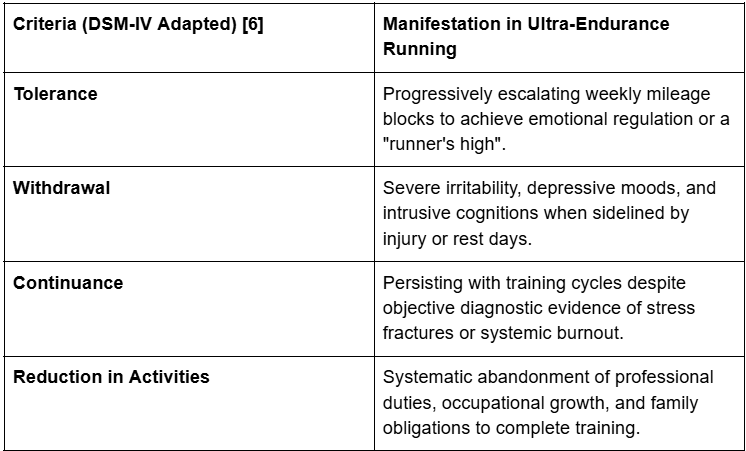
Neurobiologically, the risk profile in endurance sports is heavily mediated by the sympathetic arousal hypothesis and the endogenous opioid system, where the repetitive pursuit of the "runner's high" creates an opiate-like biochemical dependence (Dishman & O'Connor, 2009; Szabo et al., 2013). Socioculturally, this problem is amplified by digital fitness ecosystems such as Strava, where workouts transform into instruments of public evaluation. Within digital fitness platforms such as Strava, you no longer train in private, every run becomes a public performance, a data‑driven display open to comparison, judgement, and social ranking. This transforms what should be an intrinsically regulated behaviour into a socially mediated one. Research on exercise addiction consistently shows that externalised evaluation pressures heighten compulsive training tendencies, particularly in athletes already primed by the endogenous opioid reward cycle (Szabo et al., 2013).
Strava’s architecture intensifies this vulnerability through several sociocultural mechanisms:
Social comparison loops
Athletes are exposed to constant upward comparison: faster peers, longer runs, higher weekly volume. Repeated exposure to superior performances increases anxiety, self‑criticism, and compulsive compensatory training (Festinger, 1954; Vrabel et al., 2018).Public accountability pressure
Workouts become performances for an imagined audience; it has evolved into digital theatre, sometimes of the absurd. Studies show that when training is publicly visible, athletes experience heightened pressure to maintain consistency and intensity, even when fatigued or injured (Raggatt et al., 2018).Validation‑seeking behaviour
“Kudos” and segment crowns function as micro‑rewards, reinforcing behaviour through operant conditioning; another rudimentary tech-bro dopamine gerbil wheel . Digital approval becomes a proxy for self‑worth, a pattern strongly associated with exercise dependence (Hausenblas & Symons Downs, 2002).
Fear of missing out (FOMO) training
Seeing peers accumulate mileage or intensity triggers anxiety‑driven compensatory sessions. FOMO‑based training is linked to overreaching, injury, and reduced psychological wellbeing (Przybylski et al., 2013).Identity entanglement
When an athlete’s digital training history becomes a core part of their self‑concept, any deviation missed sessions, slower paces, reduced volume feels like a threat to identity stability. This mirrors patterns seen in behavioural addictions (Griffiths et al., 2015).
Strava acts as a mirror, reflecting back not just performance metrics but the runner’s insecurities, compulsions, and latent perfectionism. For runners already at risk, those who rely on an opioid “high,” who fear loss of fitness, or who derive self‑worth from volume, the platform can become a social accelerant of maladaptive behaviour. Dishman and O’Connor (2009) note that the neurobiological reward cycle of endurance exercise is particularly susceptible to environmental cues, and Strava provides a constant stream of such cues: comparison, competition, and public scrutiny.
This continuous quest for peer validation shifts running from an autonomous internal journey to an external showcase where necessary recovery is stigmatized as weakness. Consequently, athletes characterized by highly compulsive identity profiles experience a severe erosion of self-worth when volume diminishes, forcing them to run through major physiological traumas to sustain their identity (Weinstein & Weinstein, 2017).
For the at‑risk athlete, the question is not just whether to avoid these platforms, but how to reconfigure their training environment so that it no longer provokes maladaptive patterns. A complete withdrawal from digital ecosystems is rarely necessary and often counterproductive, as it can sever the individual from meaningful and helpful social support. Instead, the runner must develop a rational, psychologically informed framework that reduces exposure to the most destabilising features while preserving the elements that foster healthy connection. This involves shifting from a model of public performance to one of private accountability, where training data is no longer curated for an imagined audience but is instead used as a tool shared only with a coach or a trusted training partner(s). By removing leaderboards, weekly volume comparisons, and pace‑based public feeds, the athlete dismantles the external cues that previously fuelled compulsive training behaviours.
Many runners at risk of compulsive patterns show perfectionistic thinking, catastrophic beliefs about detraining, and a form of identity (con)fusion in which their sense of self becomes inseparable from their training metrics. A cognitive‑behavioural approach helps the athlete question these distortions, replacing them with more positive and flexible interpretations of progress, fatigue, and self‑worth. The aim is to shift the athlete’s evaluative framework from external validation to internal regulation, where the primary question becomes not “How do I compare to others?” but “How does this session align with my physiological intent and long‑term development?”
Self‑determination theory (SDT), provides a proven and useful framework for this transition. By strengthening the athlete’s sense of autonomy, competence, and relatedness, the framework restores intrinsic motivation that has been eroded by the performative pressures of digital fitness culture. Training becomes an act of self‑directed accomplishment rather than a public demonstration of discipline and relentlessness. This shift is best reinforced through deliberate exposure to situations that previously triggered anxiety: running slowly without posting the pace, taking rest days without explanation, or completing sessions that remain entirely private. These exposures gradually extinguish the fear that reduced visibility equates to reduced worth.
Realistically, the at‑risk runner must reconstruct their athletic identity around values rather than metrics. Instead of viewing themselves as the person who runs the most, they start to see themselves as the person who trains intelligently, sustainably, with purpose and balance. This identity shift is the most powerful protective factor against the compulsive tendencies that digital platforms can inflame. Through a combination of environmental modification, cognitive reframing, and values‑based identity work, the athlete learns to engage with their sport in a manner that supports both performance and psychological wellbeing, rather than allowing the digital mirror to dictate their behaviour.
Diagnostic Screening Tools
To effectively distinguish highly motivated, healthy athletic commitment from pathological, dysfunctional dependence, clinicians and coaches should look to usee validated psychometric instruments. Relying solely on training logs or total weekly volume is fundamentally flawed, as high-volume training is frequently a structural requirement for elite trail performance. Instead, screening protocol should focus on the psychological motivations and behavioral compulsions underpinning the activity. [8, 9, 10]
The Exercise Dependence Scale-Revised (EDS-R)
This scale, developed by Symons-Downs et al. (2004), remains one of the most psychometrically validated tools globally. Grounded in the DSM-IV diagnostic architecture for substance dependence, the EDS-R utilizes a 21-item self-report matrix scored via a 6-point Likert scale ranging from 1 (Never) to 6 (Always). The scale captures seven distinct symptomatic dimensions (3 items per subscale):
Tolerance
Progressively escalating training volume or intensity to achieve the desired psychological reward.Withdrawal
Manifestations of anxiety, distress, or physical tension when running is withheld.Intention Effects
Consistently running for greater durations or longer distances than
originally scheduled.Lack of Control
A persistent, unsuccessful desire to scale back training volumes.Time
Allocating disproportionate blocks of time to running-related preparation, execution, and recovery.Reduction in Other Activities
Sacrificing social, professional, or recreational obligations to complete workouts.Continuance: Maintaining training schedules despite clear somatic warnings, metabolic depletion, or diagnostic evidence of injury.
Scoring & Clinical Classification
Classification is determined via categorical decision rules in the scoring manual. A score of 5 or 6 on an item places it in the dependent range; a score of 3 or 4 indicates symptomatic tendencies; and scores of 1 or 2 are asymptomatic.
At-Risk for Exercise Dependence: Individuals who score within the dependent range (5 or 6) on three or more of the seven DSM criteria.]
Nondependent-Symptomatic: Individuals who score primarily in the 3 to 4 range across criteria. They possess noticeable dependence characteristics and are considered at-risk, but do not meet the full behavioral criteria.
Nondependent-Asymptomatic: Individuals who score primarily in the 1 to 2 range, reflecting a highly autonomous, stable, and well-regulated relationship with running.
The Exercise Addiction Inventory (EAI)
For rapid, field-based assessment within a coaching ecosystem, the Exercise Addiction Inventory (EAI) (Terry et al., 2004) provides an exceptionally high-utility alternative. It compresses the participant burden into a brief, 6-item instrument scored on a 5-point (or revised 6-point) Likert scale. The EAI targets the core components of behavioral addictions outlined by Griffiths (2005): salience, mood modification, tolerance, withdrawal, conflict, and relapse.
With a completion and scoring time of under two minutes, it serves as an efficient tool for a running coach to track over-identification tendencies during high-stress training blocks. A cumulative score above specified thresholds immediately signals the necessity for clinical referral.
Clinical Implications
Recent clinical literature emphasizes that questionnaire-based tools can suffer from false-positive rates due to the baseline high involvement of competitive endurance athletes. Because of this, coaches and clinicians should view tools like the EDS-R and EAI as preliminary diagnostic filters only.
If a runner screens as "At-Risk," it should trigger a comprehensive, multi-method evaluation including semi-structured clinical interviews. This assessment must explicitly screen for withdrawal-related disruptions and comorbidity vectors, differentiating between a primary behavioral dependency and a secondary exercise addiction driven by underlying eating disorders or body dysmorphia (McDermott et al., 2021).
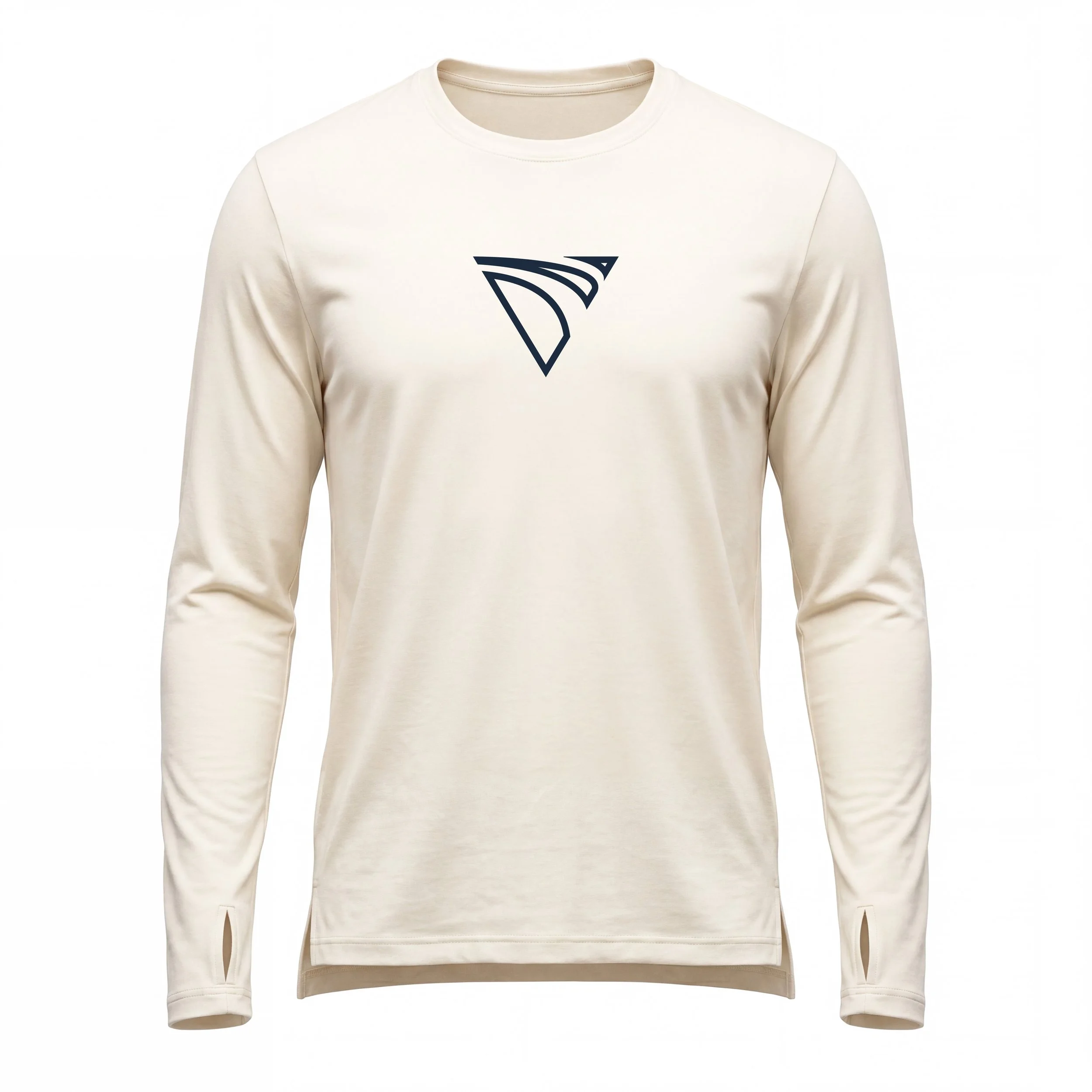
A luxury high performance top intended for track training, warm-ups and training without packs or chest straps.
Stop running in plastic and recycled plastic & run in a predominantly natural fabric with peerless wickability, breathability, comfort and fit.
Expertly fashioned from PARI™ , our next‑generation running fabric engineered from a high‑density 95% Lyocell™ base with 5% spandex for controlled stretch. It delivers a uniquely calm, cool, and stable running experience across a wide temperature range.
Thermoregulation
Tencel (cellulose fibre) has one of the highest moisture‑regain capacities of any performance fibre, giving PARI™:
rapid moisture uptake without surface wetness
a cool‑touch feel during exertion
stable thermal behaviour in warm–moderate conditions
reduced cling and reduced “swamp‑shirt” effect
Ideal for 10–25°C running conditions.
Moisture Management
Unlike polyester (which repels moisture), Tencel absorbs sweat into the fibre core, spreads it, and releases it steadily; delivering:
smoother evaporative cooling
less salt‑crusting
reduced odour build‑up
more consistent comfort over long runs
Softness + Skin Comfort
Tencel fibres have a smooth, rounded cross‑section, giving PARI™:
exceptional softness
reduced micro‑abrasion
low friction under pack straps or repetitive arm swing
suitability for sensitive skin
Movement Stability — controlled stretch, no sag
The 5% spandex is calibrated to maintain:
shape retention
garment stability during sweat load
freedom of movement without bounce
a clean silhouette that doesn’t bag out over time
Breathability — high airflow with a calm thermal profile
Tencel’s internal structure allows:
high vapour transmission
excellent airflow
Estimated UPF Protection Level
UPF 20–25
PARI™ (95% Tencel / 5% Spandex)
A high‑performance running fabric engineered for natural thermoregulation, exceptional softness, and stable movement. Tencel’s dense, smooth fibres deliver cool‑touch comfort, fast moisture uptake, and reduced odour, while 5% spandex maintains shape and freedom of movement. The mid‑weight knit provides natural UV protection (UPF 25 ). Designed for runners who want natural‑fibre intelligence with modern performance.
Read the swing tag provided with its detailed care instructions. Cold hand wash only.
Life Balance
To mitigate the onset of maladaptive dependence, contemporary psychological theory emphasizes the critical role of self-concept diversification through a comprehensive biopsychosocial framework. When an individual’s identity structure is entirely one dimensional, anchored exclusively to running, any disruption to that domain causes a mental meltdown. True life balance requires a multifaceted self-concept, ensuring the individual remains robustly "more than a runner".
Biological Axis
From a physiological perspective, maintaining a balanced athletic identity mitigates the chronic activation of stress responses and overtraining syndrome. Programmed micro-cycles of rest preserve neuroendocrine balance and muscle tissue longevity. Unidimensional runners frequently override biological warning flags (e.g., pain, severe fatigue), translating a physiological asset into structural harm, such as accelerated joint degradation or chronic immune suppression (Weinstein & Weinstein, 2017).
Psychological Axis
Psychological resilience is optimized when an athlete maintains high identity compatibility and exploration across multiple domains, as measured by modern constructs like the Multidimensional Inventory of Physical Activity Identity (MIPAI-25). Cultivating parallel identities, such as professional, artistic, familial or other social-community roles, provides alternative pathways for self-actualization, cognitive distraction, and emotional regulation when running is temporarily unavailable.
Sociocultural Axis
Social diversification buffers the athlete against isolation; get some new friends. Exercisers who develop diverse social circles outside the insular trail-running culture exhibit lower rates of social physique anxiety and dependency (Golaszewski et al., 2022). Engaging in multi-layered relational networks ensures that personal validation remains decentralized, protecting interpersonal relationships from the strain of obsessive training behaviors.
Strengthen a Balanced Exercise Identity
Goal Setting and Realisation
Setting highly individualised, practical, realistic goals is vital for cultivating and sustaining a stable running identity. Literature confirms that structured goal-setting directly enhances autonomous motivation and localized self-efficacy, fostering a more profound identification with one's physical capabilities (Burton et al., 2010; Weinberg, 2014) (pp. 2, 5).
For masters-aged and ultra-trail runners, establishing a ladder of short-term process goals alongside long-term outcome goals yields a continuous sense of athletic progression. Crucially, these goals must be grounded in an objective understanding of age-related physiological, metabolic, and neuromuscular depreciation. Seek advice from qualified and validated external sources when sanity checking your goals and methods. Goals must be underpinned by a commitment to adopting deeply supportive lifestyle habits, such as targeted strength training, mobility work, and deliberate nutritional strategy.
Social Support and Community Engagement
Endurance athletes derive a great deal of psychological reinforcement from deep immersion within specialized social networks. Empirical findings illustrate that peer interactions and active participation in community-based sports groups firmly solidify an individual's sense of belonging and athletic self-concept (Carron et al., 2002). Surrounding yourself with trail and ultra-running peers who navigate similar training demands, weather hazards, and physical challenges builds a protective micro-climate for one's identity .Just do not do so at the exclusion of non-runners who have interests, passions and concerns that may resonate with you.
Personal Narratives
Encouraging runners to actively reflect on their athletic timelines, hard-fought finishes, and the challenges they have beaten is an effective way to nurture a lifelong exercise identity. Authoring or sharing personal running narratives through training logs, blogs, or community storytelling yields heightened self-awareness and a deeper connection to the athletic self. This reflective practice deepens the runner’s long-term commitment. To maximize this effect, local running clubs and training groups must foster safe, non-judgmental environments that welcome this vulnerable sharing across both face-to-face and digital channels.
ParticipatIon
Stepping into coaching, mentoring, or trail-building roles allows veteran runners to pass on accumulated tactical knowledge, further solidifying their personal identity as athletes. Taking on visible leadership positions within running clubs or race organization teams directly enhances feelings of personal ownership and systemic investment in the sport, significantly consolidating exercise identity (Smith et al., 2014).
While athlete-led leadership committees are excellent channels for directing grassroots participation, they frequently fail when club executives or elite coaches just pay lip service to the collective input of their members . In such fractured environments, the leadership framework degenerates into a superficial box-ticking exercise. Harnessing a passionate, highly knowledgeable group of senior and master runners and putting them to lead and drive should never be perceived as an administrative threat; rather, it represents the vital engine required to optimize race preparation, foster trail stewardship, and build systemic squad support.
Framing
Framing training miles not merely as a modern health chore, but an inherent element of your lifestyle and identity, upgrades long-term behavioral adherence. Encouraging athletes to view their trail or road running as a non-negotiable component of their day to day, rather than a simple tool for weight management or basic physical conditioning, fosters a near unshakeable exercise identity (Crocker et al., 2006).
One of the most compelling tools for this shift is collaboration with exercise physiologists, sports psychologists, and coaching experts. These practitioners can clearly illustrate the compounding systemic health benefits, cognitive protections, and functional advantages of consistent endurance training .
References
Blanchard, C. M., Schinke, R. J., & McLaren, C. J. (2009). Predicting adherence to exercise through self-determination theory: The role of the exercise identity. The Journal of Exercise Science & Fitness, 7(1), 16-25 (p. 4).
Burton, D., Naylor, P. J., & McHugh, T. L. (2010). Goal setting and self-regulation among older adult athletes: Exploring the influence of physical activity. International Journal of Sports Science & Coaching, 5(1), 29-42 (p. 4).
Carraro, A., & Gaudreau, P. (2010). Spontaneous and directed self-regulation in physical activity: The mediating role of exercise identity. Journal of Sport & Exercise Psychology, 32(2), 230-248.
Carron, A. V., Hausenblas, H. A., & Mack, D. (2002). Group dynamics in sport and exercise: Sociocultural influences on social support. Journal of Sports Sciences, 20(9), 753-765 (p. 4).
Crocker, P. R. E., Eklund, R. C., & Kowalski, K. C. (2006). The role of exercise and sport in the lives of young athletes: A sport psychology perspective. International Journal of Sport Psychology, 37(3), 309-318 (p. 4).
Dishman, R. K., & O'Connor, P. J. (2009). Lessons learned from neurobiological models of exercise dependence. Journal of Sport & Exercise Psychology, 31(s1), 23-24.
Dishman, R. K., & O’Connor, P. J. (2009). Lessons in exercise neurobiology: The case of endorphins. Mental Health and Physical Activity, 2(1), 4–9. https://doi.org/10.1016/j.mhpa.2009.01.002(doi.org in Bing)
Festinger, L. (1954). A theory of social comparison processes. Human Relations, 7(2), 117–140. https://doi.org/10.1177/001872675400700202(doi.org in Bing)
Fleshman, L., Rosenberg, R., & Hsieh, C. (2018). Exploring master athletes’ strategies for maintaining participation amid setbacks. Journal of Aging and Physical Activity, 26(2), 340-353 (p. 4).
Golaszewski, N. M., LaCroix, A. Z., Hooker, P. S., & Bartholomew, J. B. (2022). Group exercise membership is associated with forms of social support, exercise identity, and amount of physical activity. International Journal of Sport and Exercise Psychology, 20(2), 630-643. doi.org (p. 4)
Griffiths, M. D., Szabo, A., & Terry, A. (2015). The exercise addiction inventory: A quick and easy screening tool for health practitioners. British Journal of Sports Medicine, 39(6), e30. https://doi.org/10.1136/bjsm.2004.017020(doi.org in Bing)
Hausenblas, H. A., & Downs, D. S. (2011). Exercise addiction: A systematic review of the empirical literature. Journal of Addictive Diseases, 30(4), 312-321 (p. 4).
Holt, N. L., Macdougall, A. J., & Medina, G. F. (2013). The role of social support in the adjustment of master athletes. International Journal of Sports Science & Coaching, 8(4), 829-843 (p. 4).
Lundqvist, C., & Raglin, J. (2015). Identity and sport: A narrative approach to understanding the role of sport in identity construction. Psychology of Sport and Exercise, 16(1), 239-245 (p. 4).
McDermott, H., McDermott, C., & Griffiths, M. D. (2021). The development and validation of the Secondary Exercise Addiction Scale (SEAS). International Journal of Mental Health and Addiction, 21, 1-22. doi.org
McDonald, M. E., & Latham, K. (2015). The role of exercise identity in achieving long-term motivation within older adult athletes. Journal of Sport & Exercise Psychology, 37(2), 198-207 (p. 4).
Przybylski, A. K., Murayama, K., DeHaan, C. R., & Gladwell, V. (2013). Motivational, emotional, and behavioral correlates of fear of missing out. Computers in Human Behavior, 29(4), 1841–1848. https://doi.org/10.1016/j.chb.2013.02.014(doi.org in Bing)
Raggatt, M., Wright, C. J., Carrotte, E., Jenkinson, R., Mulgrew, K., Prichard, I., Lim, M. S. C., & Thomas, S. L. (2018). “I aspire to look and feel healthy like the posts convey”: Engagement with fitness inspiration on social media and perceptions of its influence on health and wellbeing. BMC Public Health, 18, 1002. https://doi.org/10.1186/s12889-018-5930-7(doi.org in Bing)
Reed, J. P., & Phillips, E. L. (2005). Social identity and master athletes: Exploring the connections between identity development and sport participation. The Gerontologist, 45(4), 455-461 (p. 5).
Rhodes, R. E., & Dean, R. N. (2009). Understanding physical inactivity: Prediction of four sedentary leisure behaviors. Leisure Sciences, 31(2), 124–135. doi.org (p. 5)
Schwab, C. H., Barringer, M. G., & McKeown, M. A. (2015). Setbacks and recovery in master athletes: The impact of a strong exercise identity. The Sport Psychologist, 29(4), 345-356 (p. 5).
Smith, A. L., Camiré, M., & Moyer, A. (2014). Coaches’ perspectives on athlete development: The role of athlete identity and autonomy. International Journal of Sports Science & Coaching, 9(4), 635-650 (p. 5).
Strachan, S. M., & Brawley, L. R. (2008). Healthy exercise identity and control beliefs: A harmonious or discordant relationship? Journal of Applied Social Psychology, 38(7), 1921-1937 (p. 1).
Strachan, S. M., Brawley, L. R., Spink, K., & Glazebrook, C. (2010). Older adults' physically active identity: The role of self-efficacy and outcomes. Journal of Aging and Physical Activity, 18(2), 176-189 (p. 1).
Strachan, S. M., Woodgate, J., Brawley, L. R., & Tse, A. (2005). The identity-behavior relation and exercise: The role of self-regulatory efficacy. Journal of Sport & Exercise Psychology, 27(2), 172-187 (p. 1).
Symons-Downs, D., Hausenblas, H. A., & Nigg, C. R. (2004). Factorial validity and psychometric properties of the Exercise Dependence Scale-Revised. Measurement in Physical Education and Exercise Science, 8(4), 183-201.
Sweeney, J. K., & Harwood, C. G. (2016). Understanding the role of exercise identity in sport participation. Sport & Exercise Psychology Review, 12(1), 49-57 (p. 5).
Szabo, A., Griffiths, M. D., de La Vega, R., Mervó, B., & Demetrovics, Z. (2013). Exercise addiction in Spanish athletes: Investigation of the roles of gender, social context and level of involvement. Journal of Behavioral Addictions, 2(4), 249–252. https://doi.org/10.1556/JBA.2.2013.4.9(doi.org in Bing)
Terry, A., Szabo, A., & Griffiths, M. D. (2004). The exercise addiction inventory: A quick and easy screening tool for health practitioners. Behavioral Medicine, 30(1), 75-83.
Tóth, T., Albert, B., Király, O., & Demetrovics, Z. (2023). Personality traits associated with the risk of exercise dependence in ultraendurance athletes: A cross-sectional study. International Journal of Environmental Research and Public Health, 20(2), 1042. doi.org
Vrabel, J. K., Zeigler-Hill, V., & Southard, A. C. (2018). Self-esteem and social comparison: The roles of social comparison orientation and upward and downward comparisons. Personality and Individual Differences, 129, 113–117. https://doi.org/10.1016/j.paid.2018.03.009(doi.org in Bing)
Weinberg, R. S. (2014). Goals: How to use them effectively in sport and exercise. In R. S. Weinberg (Ed.), Sport psychology: Foundations and applications (pp. 157-179). McGraw-Hill (p. 5).
Weinstein, A., & Weinstein, Y. (2017). Compulsive exercise: Links, risks and challenges faced. International Journal of Mental Health and Addiction, 15(2), 450-464.
Wilson, P. M., & Muon, S. (2008). Psychometric properties of the Exercise Identity Scale in a diverse sample of Canadian university students. Research Quarterly for Exercise and Sport, 79(4), 486-497 (p. 1). [2, 7, 16, 17]