

CITY immersive
Here we learn a little bit, via evidence of the dovetailing of mind, runner and data in the city.
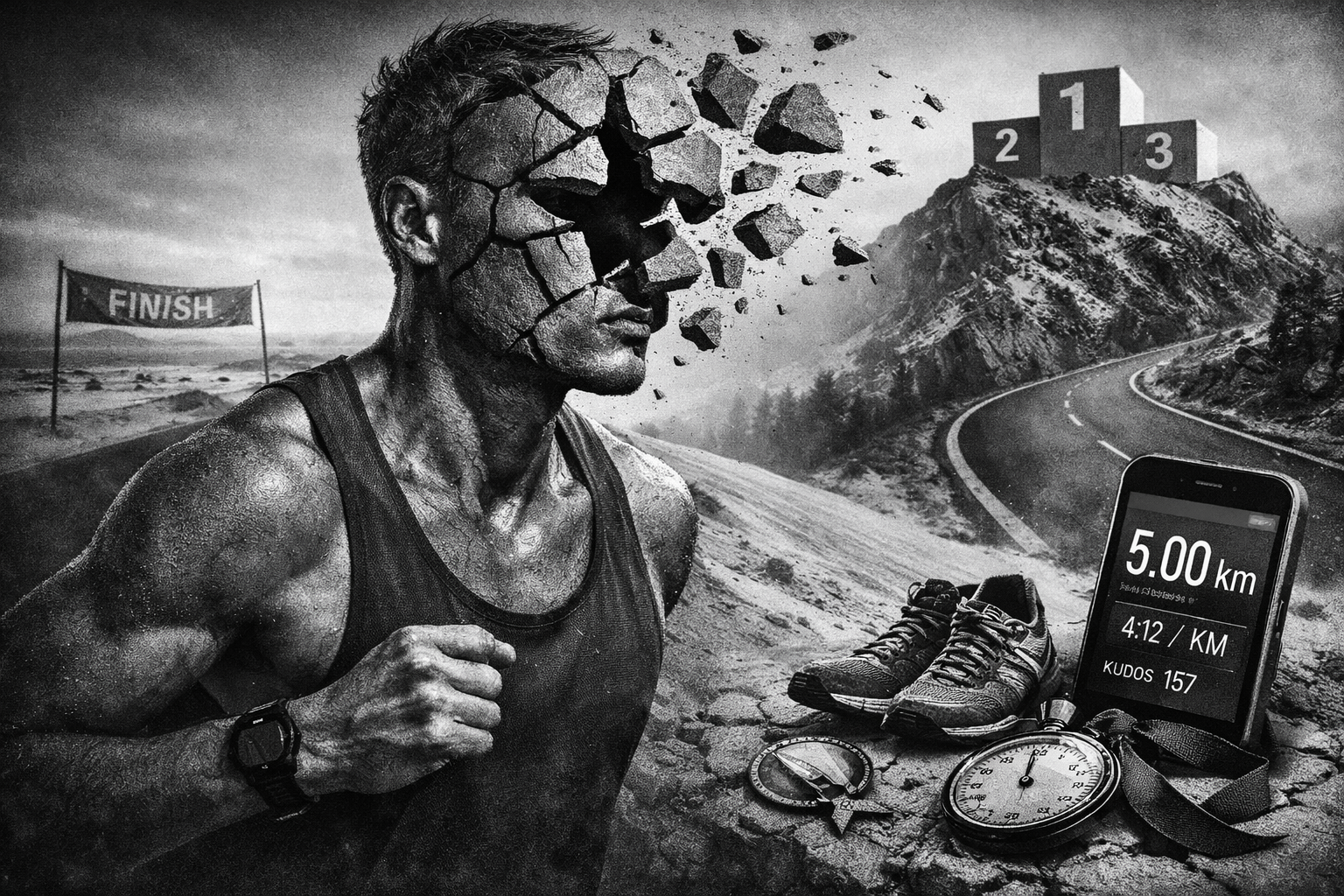
More than a Runner?
The Trail Less Travelled: When Running Becomes Who You Are
At what point does dedication turn into dependence? Modern endurance culture celebrates obsession, the early alarms, the relentless mileage, the digital applause. Yet beneath the surface, a powerful psychological construct is at play: exercise identity. When the act of running merges too tightly with self‑worth, the same mechanism that drives resilience can quietly eat away at your wellbeing.
This piece explores the neurobiology, sociology, and psychology of the runner’s self; from the endorphin‑driven highs that mimic addiction to the social validation loops of Strava that turn recovery into public theatre. It argues for a multidimensional identity structure that protects longevity, mental health, and the simple joy of movement.

SAND & SNOW
What if the key to faster times lay not on the track alone? Modern endurance science is rediscovering what Percy Cerutty knew decades ago, that unstable terrain rewires the athlete from the ground up. Running on sand and snow doesn’t just build lungs and legs; it forges a metabolic engine and mental resilience that asphalt can’t touch. These compliant surfaces demand concentric power, precision balance, and deep oxygen economy, all while protecting joints from the destructive impact of hard mileage.
This article explores how sand‑dune and snowshoe training can be periodised to transform the 5 km runner’s physiology, from mitochondrial biogenesis to psychological toughness, and why embracing instability may be the most stable path to elite performance.